The Mistake Leaders Have Made During Every Technology Revolution
By Samuel Roy
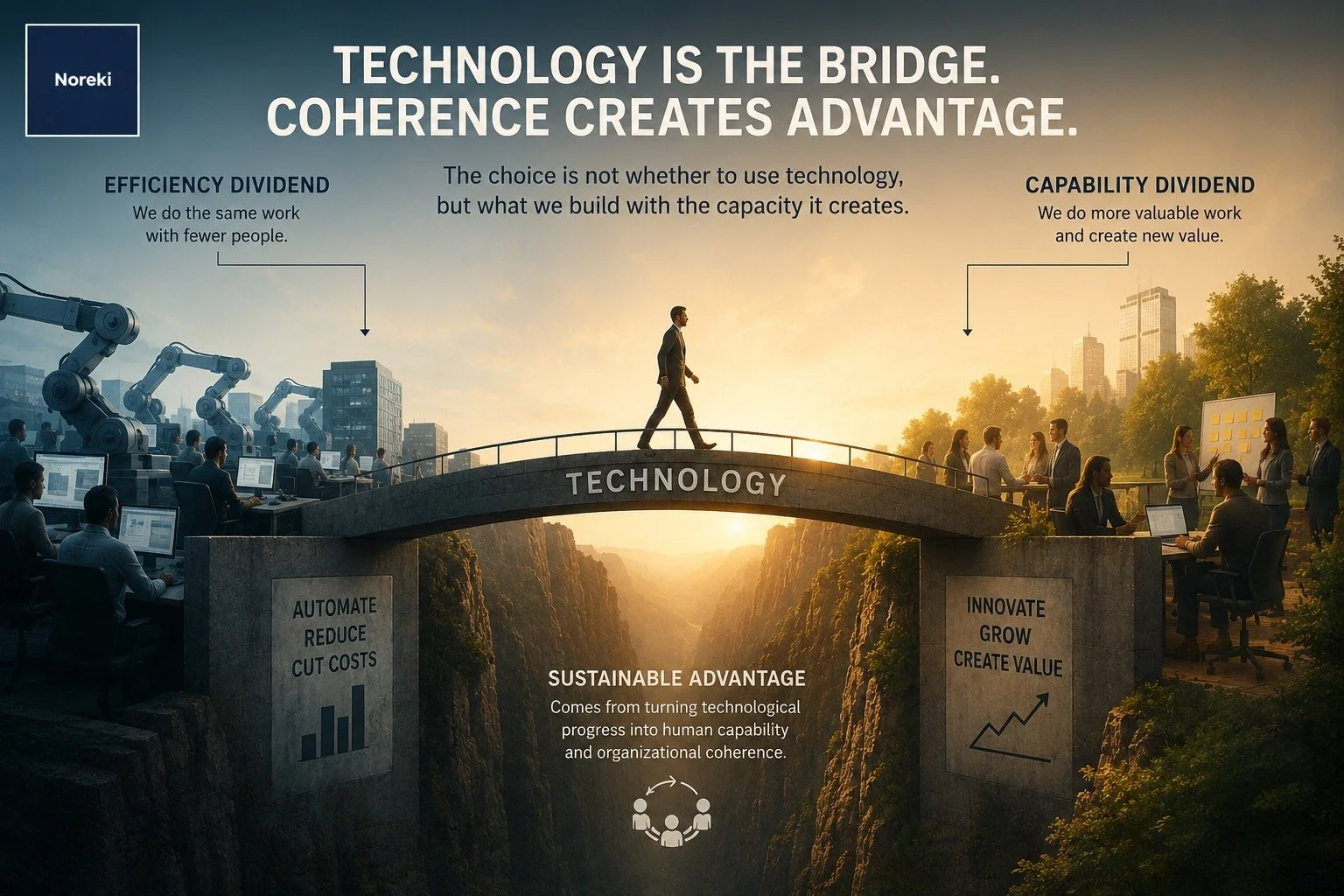
Every technological revolution begins with extraordinary optimism.
Steam engines promised to transform manufacturing. Computers promised the paperless office. The internet promised limitless connectivity. Smartphones promised constant access to information. Today, artificial intelligence promises unprecedented productivity.
The technology changes. The headlines change. Yet the conversation remains remarkably consistent. We immediately begin asking which jobs will disappear, how many people will be needed, and how quickly organizations can reduce costs.
History suggests we have been asking the wrong question for more than two hundred years.
The organizations that create lasting value are rarely those that adopt technology simply to do the same work with fewer people. They are the ones that use technology to fundamentally expand what their people, and ultimately their organizations, are capable of accomplishing. Every major technological revolution has rewarded those who invested as much in new organizational capabilities as they did in the technology itself.
That distinction matters because it is the difference between becoming more efficient and becoming more competitive.
History Tells a Different Story
The Industrial Revolution offers one of the clearest examples. Steam-powered machinery dramatically increased production while eliminating countless manual tasks. It would have been easy to conclude that the greatest opportunity lay in reducing the workforce. Instead, the organizations that reshaped entire industries invested heavily in capabilities that barely existed a generation earlier. They developed industrial engineering, modern quality management, large-scale logistics, professional management and increasingly sophisticated product design. Machines increased output, but people transformed that productivity into entirely new ways of creating value. The technology was important. The organizational capability built around it proved far more difficult for competitors to replicate.
The same pattern repeated itself with computers. When spreadsheets, databases and enterprise systems entered the workplace, many administrative activities became dramatically faster. Routine calculations that once consumed days could be completed in minutes, and processes that relied on paper files became digital. Yet organizations did not suddenly become less dependent on people. Finance evolved from producing reports to informing strategy. Human resources shifted from processing transactions toward workforce planning, leadership development and organizational effectiveness. Entire professions emerged in cybersecurity, software engineering, user experience and data science. Computers certainly replaced work. More importantly, they elevated the value of the work that remained.
The internet followed a remarkably similar path. Almost every organization eventually built a website, digitized customer interactions and connected its operations. Those capabilities quickly became expected rather than exceptional. The companies that separated themselves were not those that simply embraced the technology first, but those that fundamentally reimagined how they created value. Amazon did not build an enduring advantage because it sold products online. It built an enduring advantage because it continuously strengthened capabilities in logistics, customer experience, experimentation and innovation. The technology became widely available. Those organizational capabilities did not.
AI Is the Next Test
Artificial intelligence is likely to follow the same trajectory. It will undoubtedly replace many human tasks, and in many cases it should. Few organizations create meaningful value by asking highly capable people to summarize meeting notes, prepare routine reports, search across disconnected systems or rewrite standard communications. Those activities consume time without significantly increasing organizational capability. Automating them is not only reasonable; it is good management.
The mistake is believing that replacing work should become the objective.
Every technological revolution creates what I think of as two dividends. The first is an Efficiency Dividend. Organizations produce the same outputs with fewer resources. This dividend is real, measurable and attractive. It also becomes increasingly available to everyone as technologies mature.
The second dividend is far more valuable, yet it receives far less attention. Technology creates time, capacity and cognitive space that can be reinvested into solving more complex problems, strengthening customer relationships, mentoring colleagues, improving systems, developing new products and experimenting with better ways of working. I think of this as the Capability Dividend, and history suggests it is where enduring competitive advantage is created.
The distinction is subtle but important. Efficiency improves today's performance. Capability determines tomorrow's.
Where Technology Meets Coherence
This is where the conversation becomes less about artificial intelligence and more about organizational coherence. Technology does not operate in isolation. It influences how strategy is executed, how leaders make decisions, how work flows across teams, how culture evolves and how people invest their energy. An organization may automate dozens of processes, but if leadership continues rewarding activity instead of outcomes, if strategy remains unclear, if collaboration deteriorates or if employees lose the time to think, create and learn, technology will simply accelerate an incoherent system. Productivity may improve in the short term while adaptability quietly declines over time.
Conversely, organizations that deliberately reinvest the capacity technology creates become progressively more coherent. They redesign roles rather than simply eliminate them. They help managers spend more time coaching than reporting. They give technical experts greater freedom to innovate instead of increasing administrative expectations. They strengthen collaboration across functions because people finally have the capacity to solve problems that had always been postponed by operational demands. Technology becomes more than an efficiency tool; it becomes an enabler of a stronger organization.
The Real Opportunity
This may ultimately become the defining leadership challenge of the AI era. Within a few years, access to advanced models will no longer differentiate organizations. Most competitors will have similar tools, similar automation platforms and similar technical capabilities. Efficiency will become the cost of participating in the market, not the source of competitive advantage.
Competitive advantage will once again depend on something much harder to replicate. It will depend on how effectively organizations convert technological progress into stronger human capability, and stronger human capability into greater organizational capability.
That is ultimately what coherence makes possible. It aligns purpose, strategy, leadership, operations, culture and human energy so that every technological advance strengthens the organization instead of simply accelerating its existing weaknesses.
Perhaps that is the real lesson history has been teaching us all along. Technology creates value when it replaces work. It creates competitive advantage when it expands organizational capability. The organizations that understand the difference will not simply become more efficient than their competitors.
They will become more capable.
Samuel Roy is the founder of Noreki and the author of The Coherence Gap™: Closing the Distance Between Aspiration and Experience. His work explores how purpose, strategy, leadership, operations, culture, and human energy interact to create organizations where aspiration and experience become increasingly aligned.


















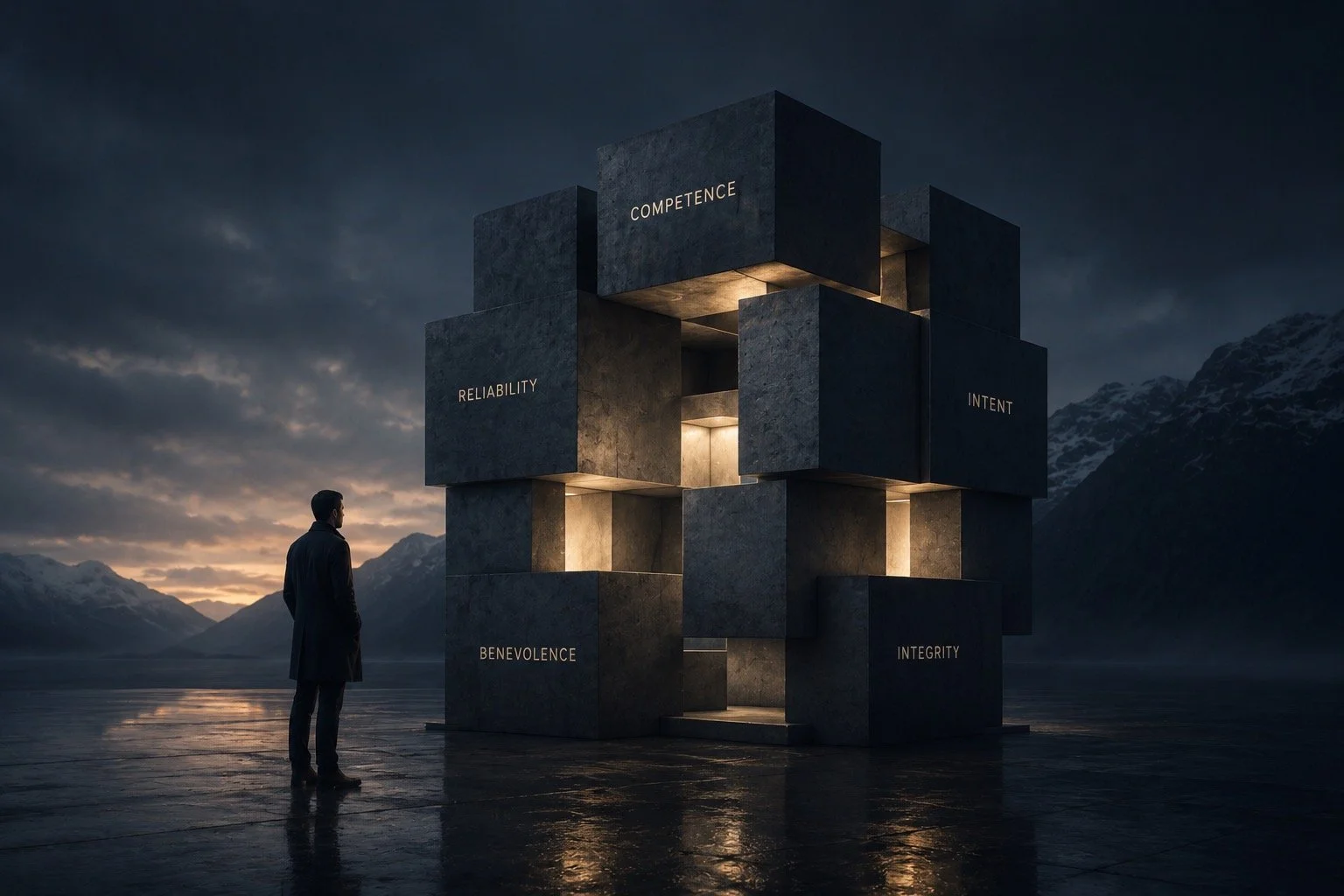






Psychological safety is often discussed in theory, but its clearest test may be surprisingly simple: where do employees go when they make a mistake? This article explores how leaders build trust, accountability, and psychological safety through the way they respond when things go wrong.